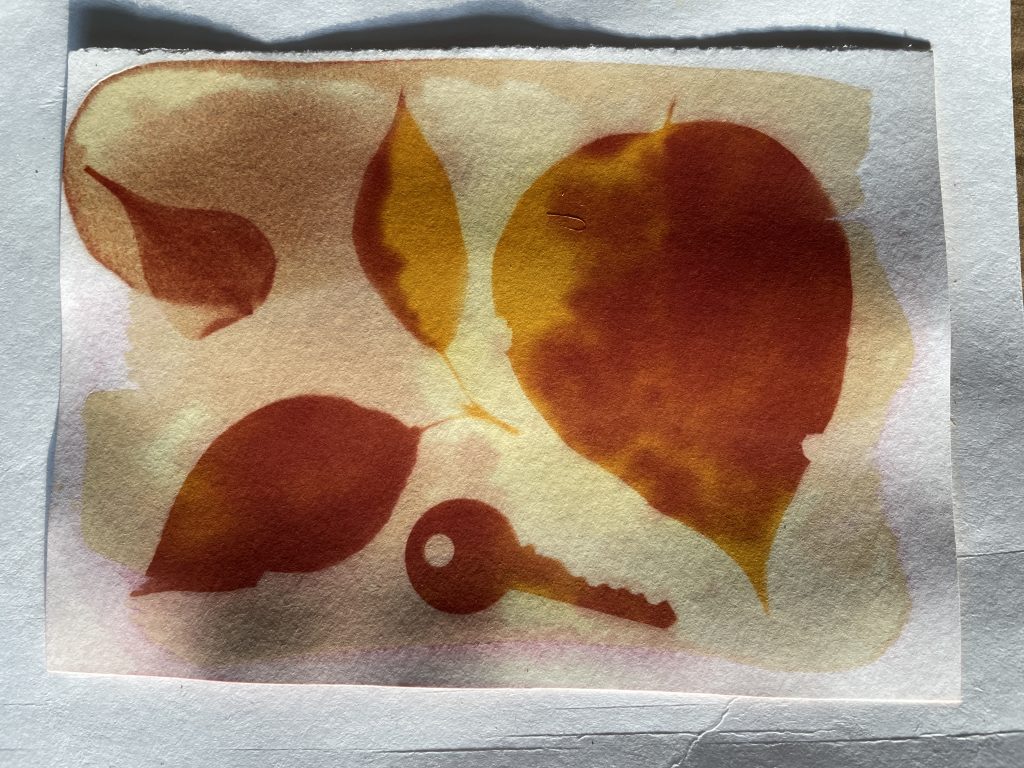
 World Anthotype Day is October 31, 2026. Prints may submitted to AlternativePhotography.com now, until then. Visit: https://www.alternativephotography.com/world-anthotype-day/
One of the first printing tricks people often learn in a traditional darkroom is making photograms by putting objects on top of light-sensitive paper, exposing it to light, then developing it. The Dadaists such as Man Ray and László Moholy-Nagy were instrumental in bringing this simple but sublime technique into galleries and museums in the 1940s.
Anthotypes offer a much simpler way for teachers to demonstrate how to make photograms and even photographic prints without a darkroom, and in and outside the classroom, using household spices, chemicals, and the sun! Although World Anthotype Day is one October 31, people are encouraged to make them during September and October when the sun is at its brightest in many parts of the world.
What this alternative photographic process gives in simplicity and ease of teachability, it takes away in longevity, however, as anthotypes fade quickly with prolonged exposure to light after processing. One solution to this problem is to apply UV-proof lacquer spray after the prints dry. One practitioner reported a framed print lasting over 8 years without noticeable fading after treating with UV spray.
INTAGLIO PRINTMAKERS: Take 20% off our custom-made polymer photogravure plates and digital film positives/negatives for printmakers, NOW thru 9/30/26. https://shop.intaglioeditions.com
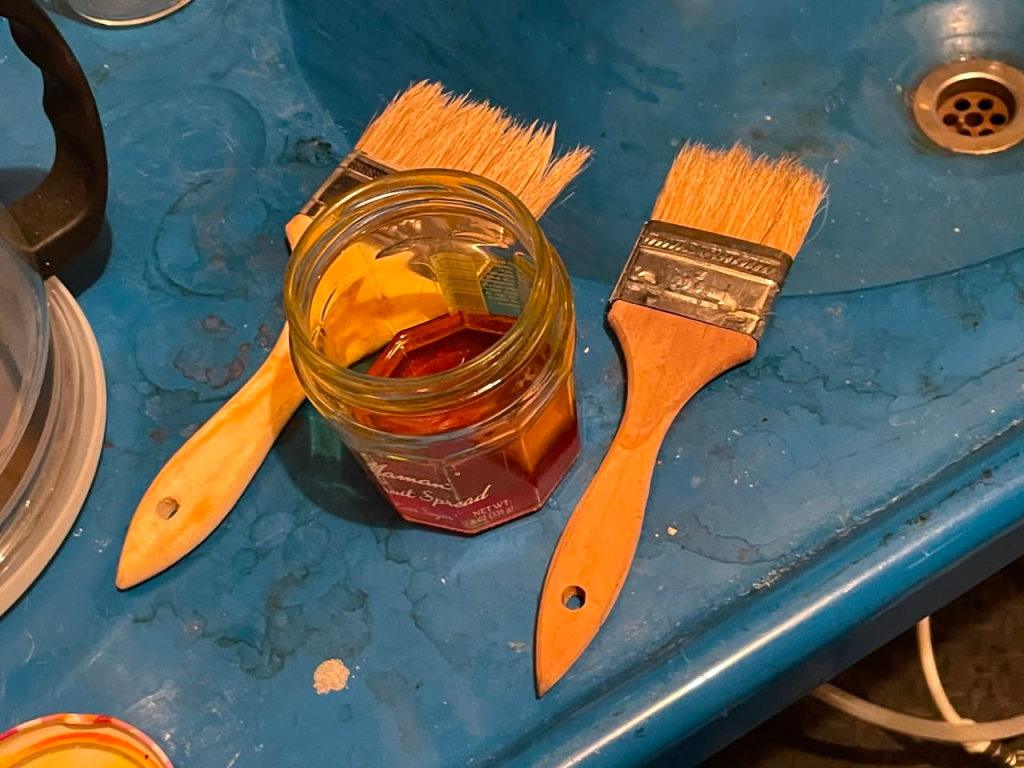
This jar of sensitizer was created using a filtered mixture of 1 tablespoon of turmeric to 1/4 cup of 99% isopropyl alcohol. These house painting brushes work fine, but we also like using hake brushes for coating. After some testing we found the best papers for this technique were washi – papers that do not contain sizing.
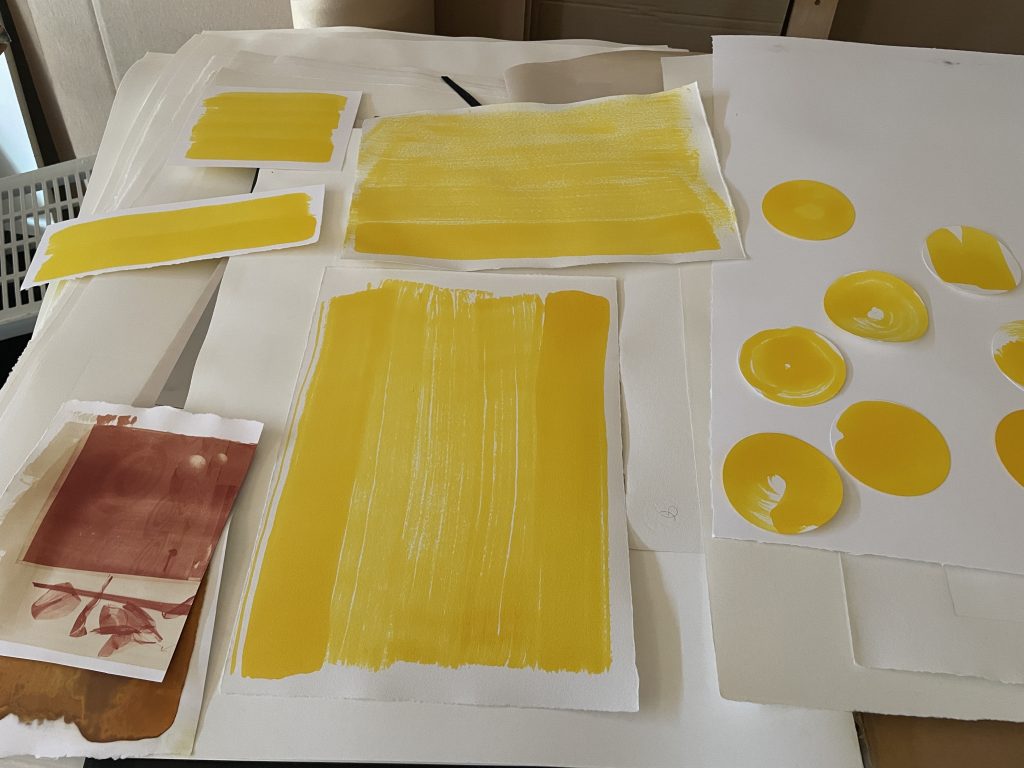
We found that two passes with the brush dipped in the coating provided adequate coverage. The dry streaks we thought would create an artistic effect, but it looked more like a defect after processing. Cutting shapes out of the paper and applying the sensitizer in shapes is also an option.
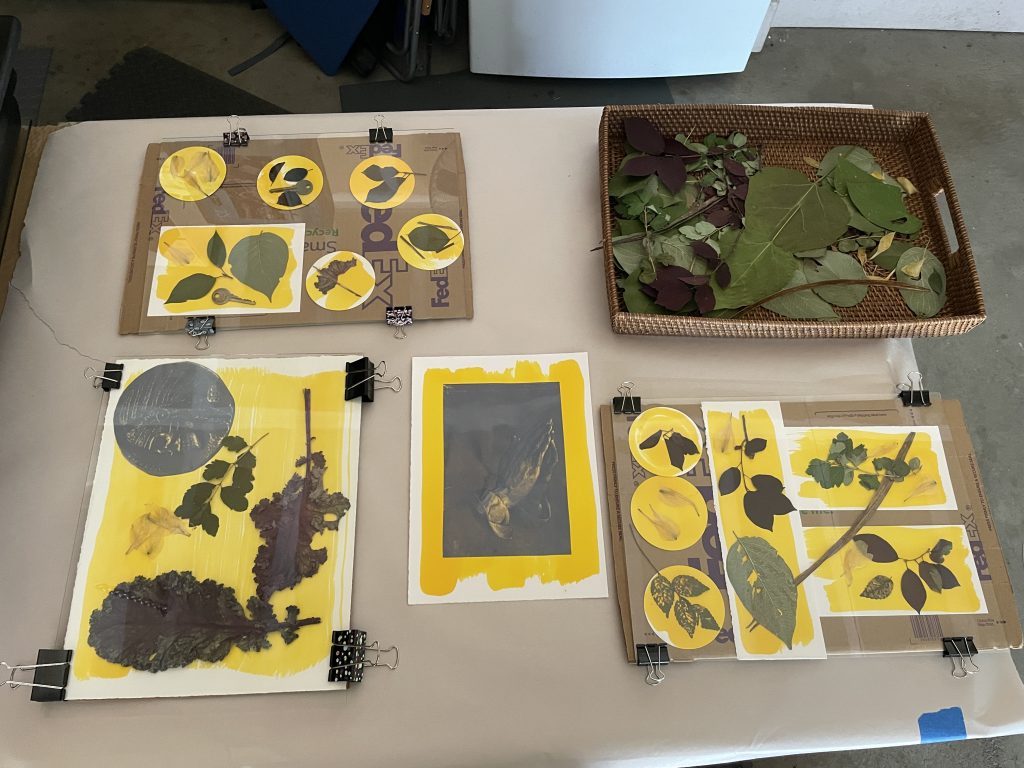
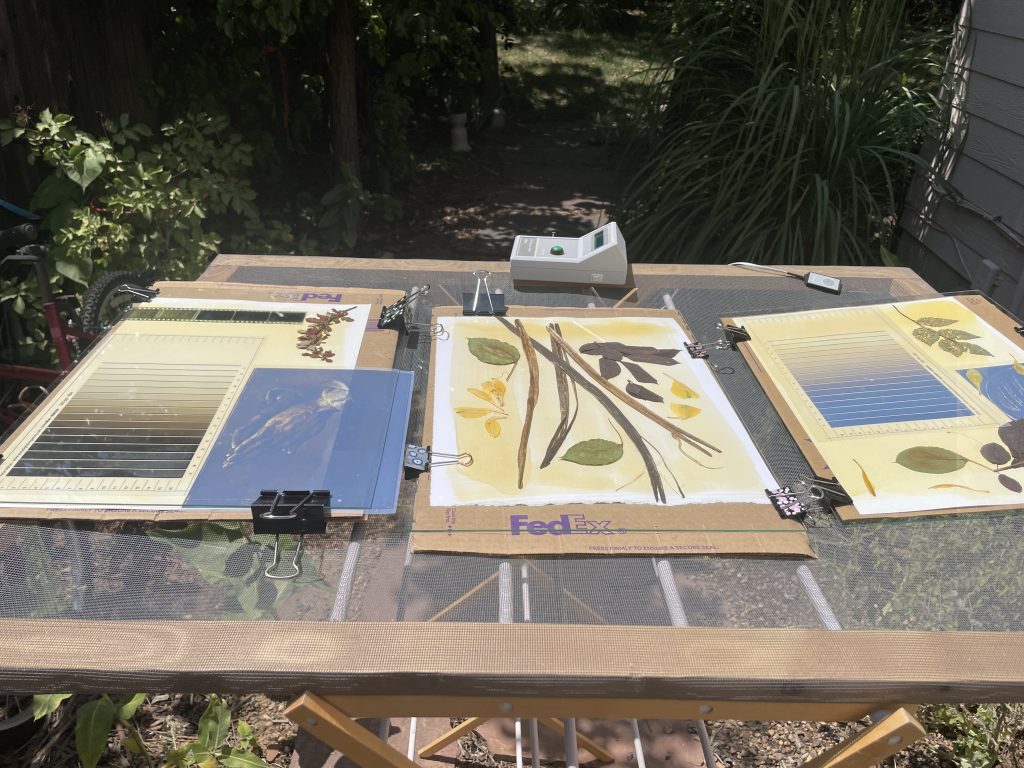
Simple binder clips and glass on top of heavy-weight cardboard provide the hardware needed to create a anthotype photogram using the sun! In the bright Colorado sun we found exposing for 45 minutes was best.
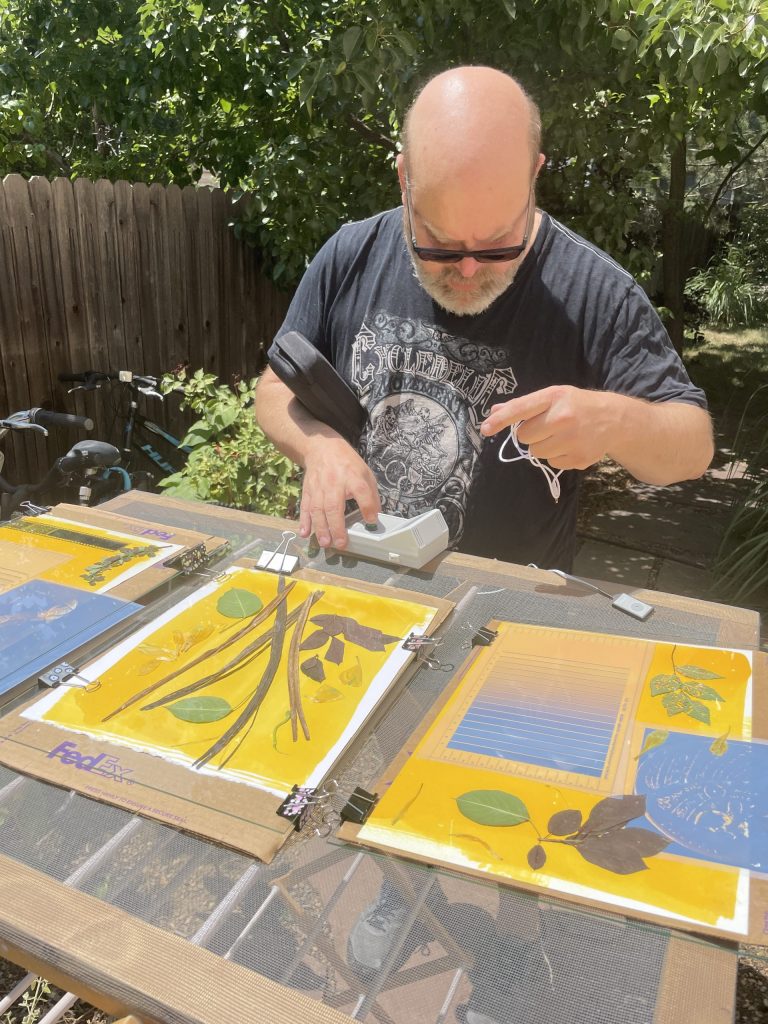
These simple contact frames worked perfectly fine for our requirements. Here I am setting up an ultra violet light reader to measure the amount of exposure in our first round of tests. We found 45 minutes in the bright, Colorado, noon-day sun gave the best amount of exposure for our turmeric anthotypes. The reflectivity off my head was NOT factored in.
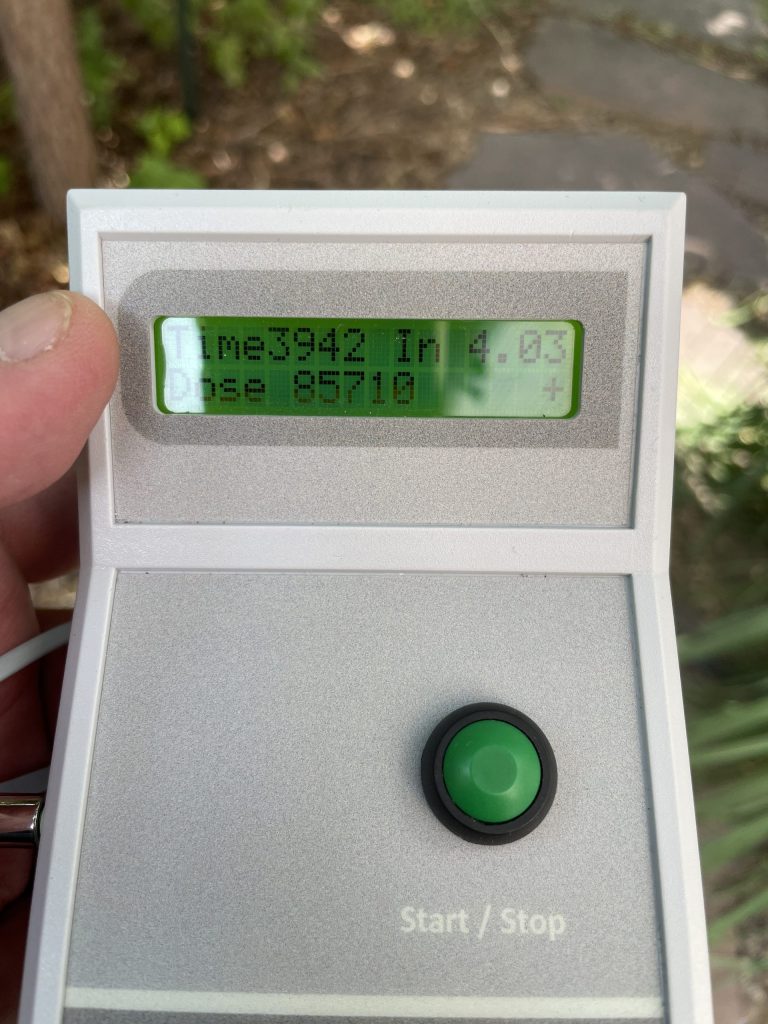
Our trusty UV meter measures time in seconds and exposure in what it calls “doses” of light. I’ve relied on it for years to double-check output of my industrial exposure unit, but it works to measure the sunlight as well. Sadly, it’s no longer made.
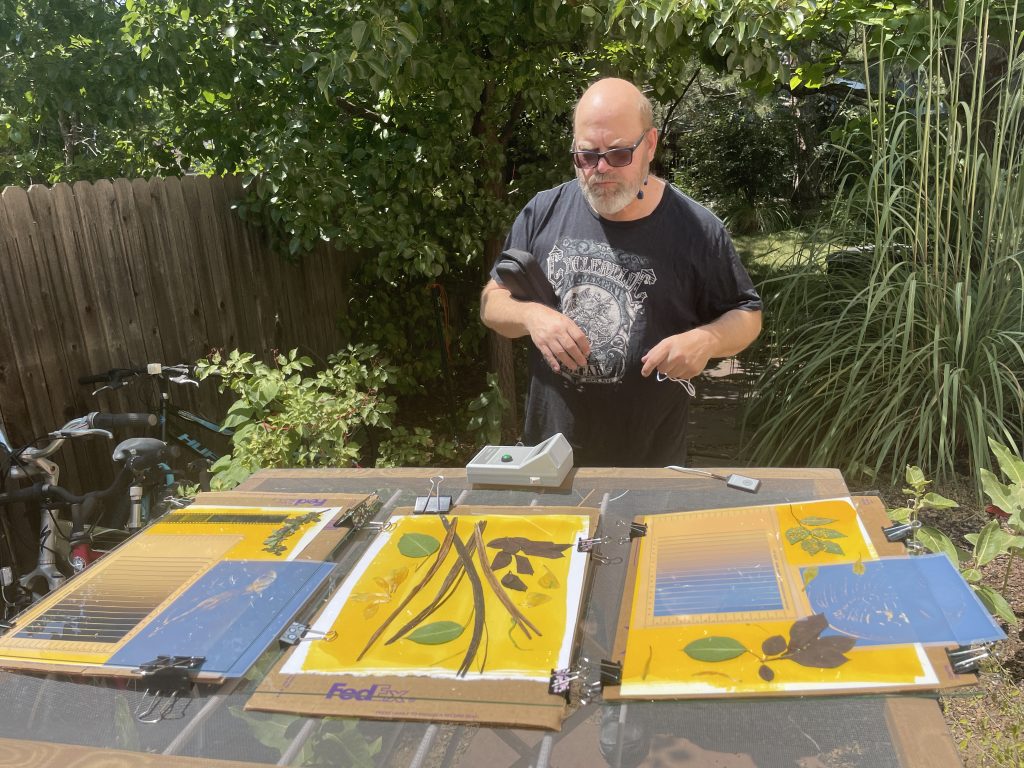
Note the bright-orange hue of the dried turmeric on the paper.
Here you can see after an hour of exposure, the paper emulsion has changed to bright yellow.
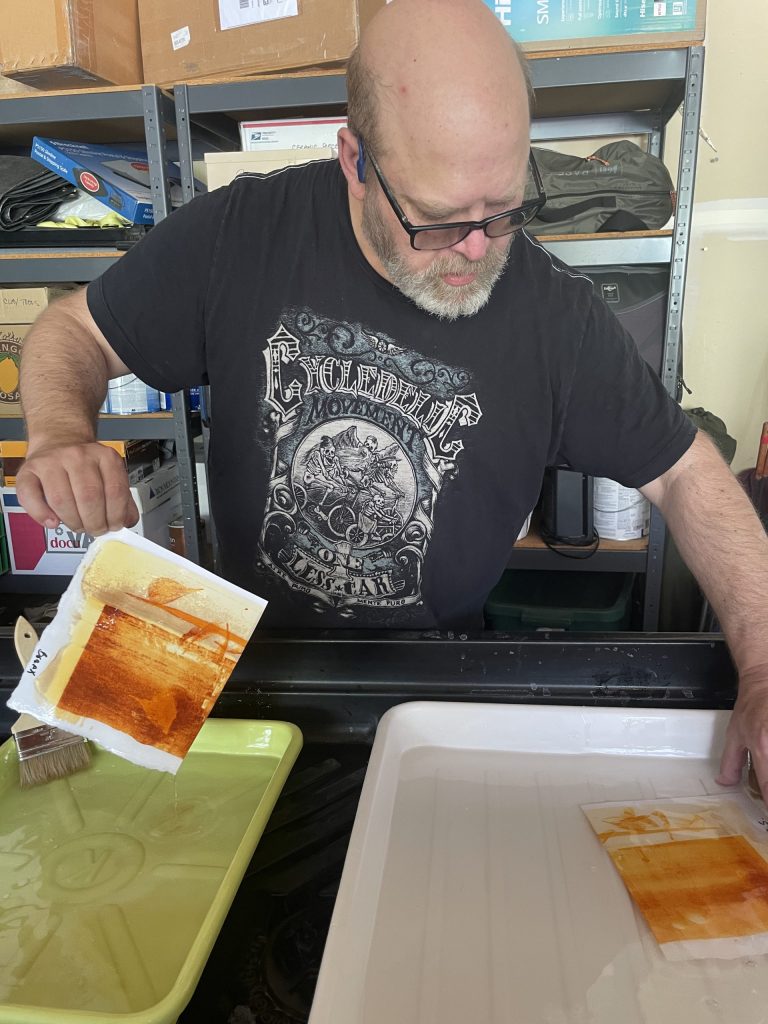
Here I’m processing the test prints in baths of borax (yellow tray) and baking soda (white tray) to see which one produced the most desirable outcome. We decided the Borax solution gave browner, amber tones, while the baking soda gave a much redder tone. We used about 1/4 cup powder per gallon of water.
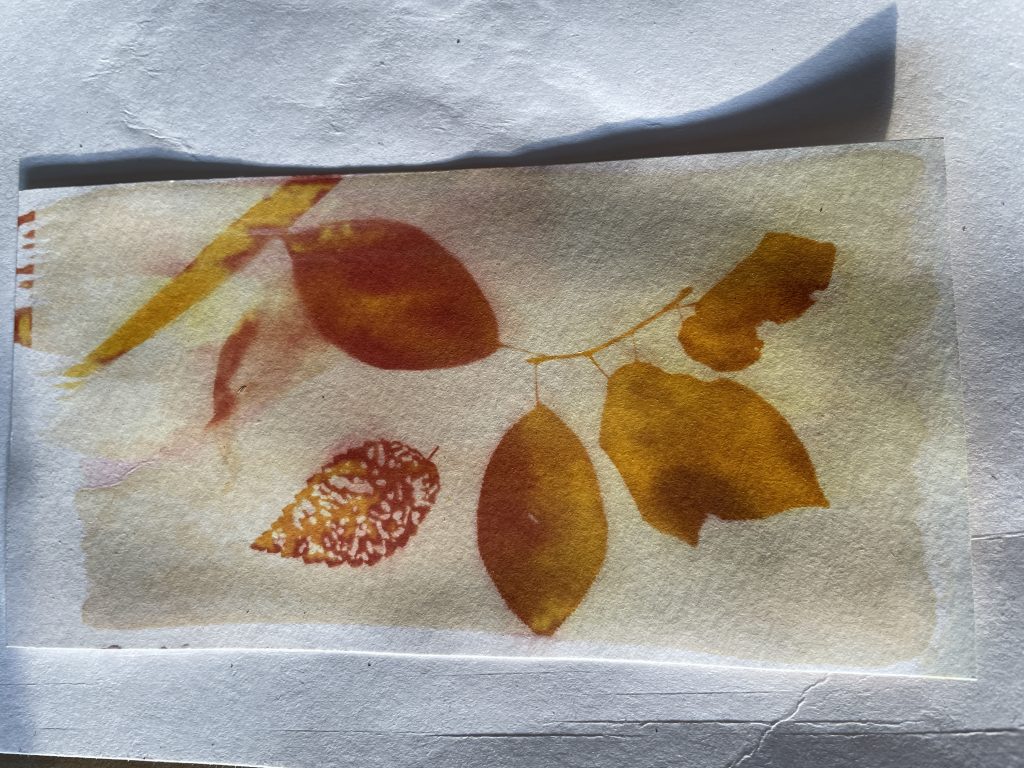
One technique that added more tones and colors was to process half the print in Borax, and the other half in baking soda!
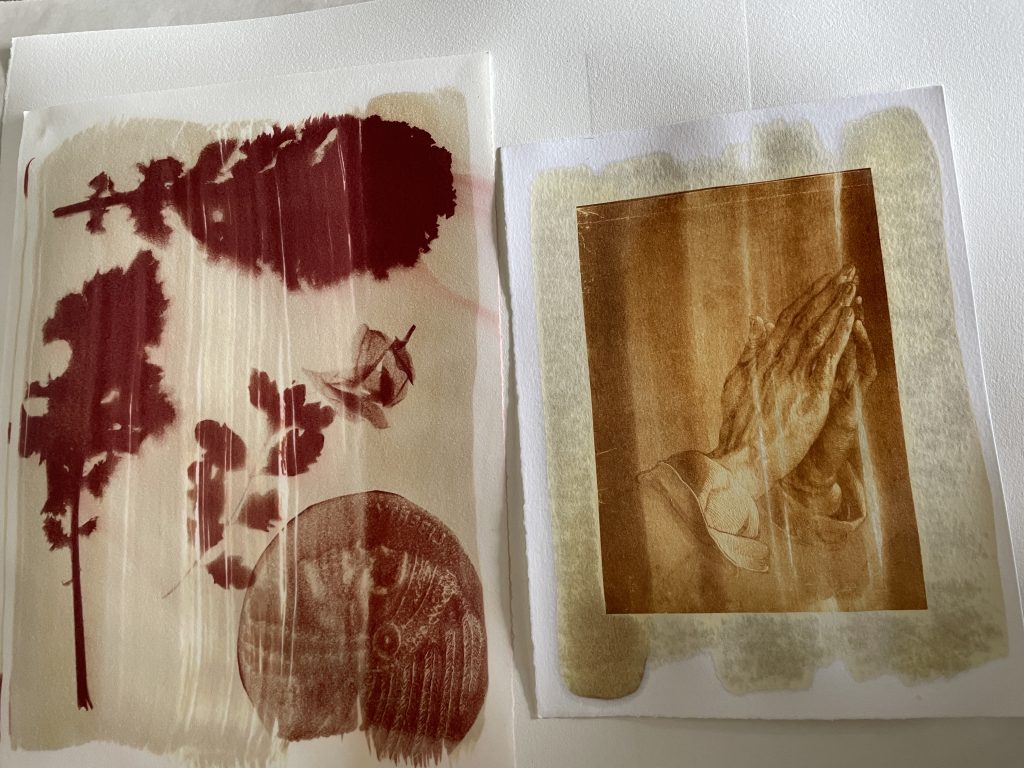
Here I tried some film positives that were calibrated for polymer photogravure plates to see how they looked. You can see the streaks in the emulsion through both of these prints. We avoided this in the future by making two passes with the brush instead of one dry one.
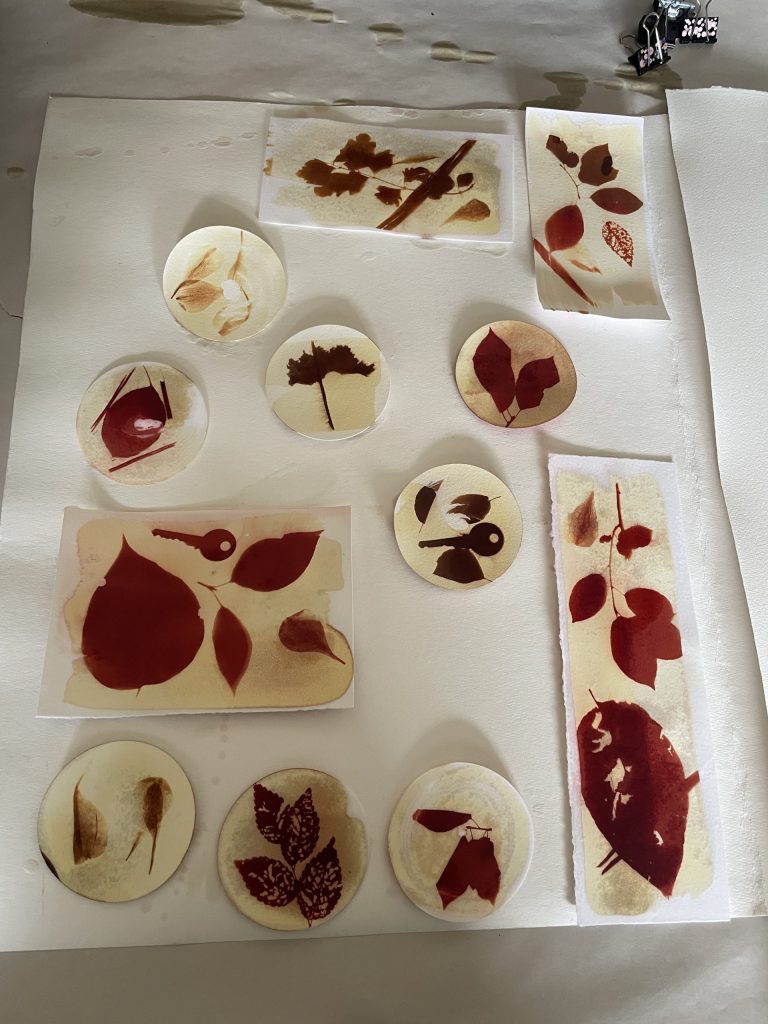
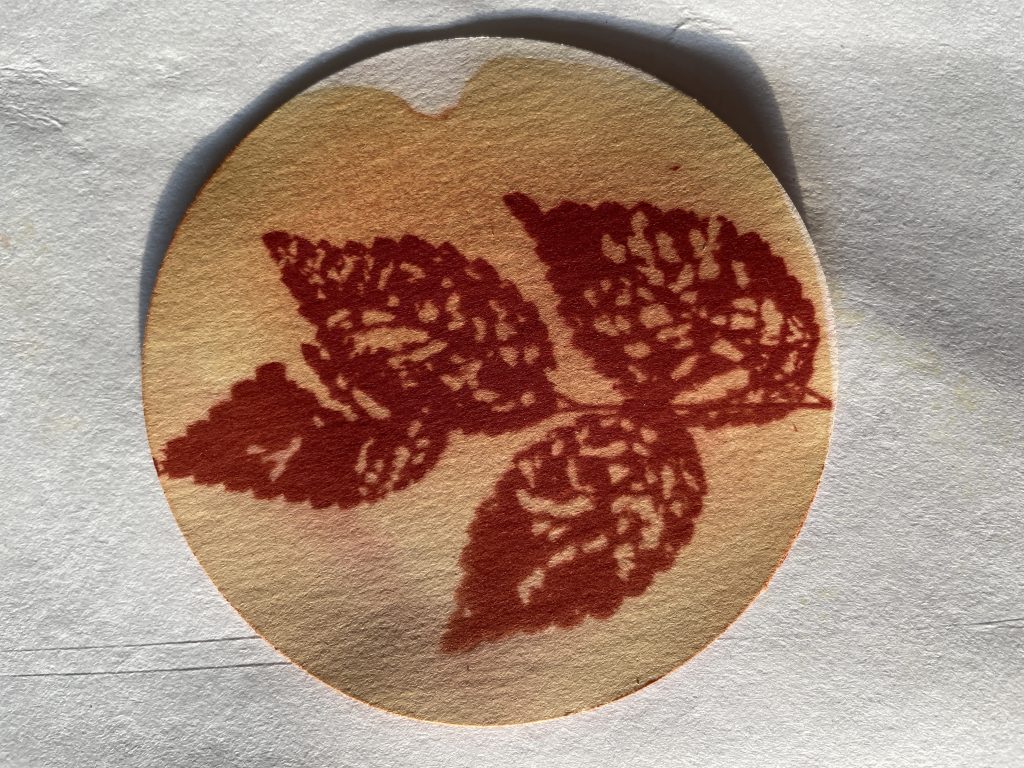 Conclusion: Many other plants, besides turmuric can be used to make sensitizer for anthotypes, with a complete list on the website linked below. Commercial, textured watercolor and printmaking papers with sizing resisted the turmeric pigment. We found the approach worked better with pure washi papers – 100% Cotton, 100% Alpha Cellulose, or a combination of the two. We also preferred borax for the “developer” because of the richer reds, orange and yellows it produced.
World Anthotype Day is October 31, 2026. Prints may submitted to AlternativePhotography.com now, until then. Visit: https://www.alternativephotography.com/world-anthotype-day/
INTAGLIO PRINTMAKERS: Take 20% off our custom-made polymer photogravure plates and digital film positives/negatives for printmakers, NOW thru 9/30/26. https://shop.intaglioeditions.com